Anesthesia and sedation options
The lightest plan that keeps you safe and still is the one that gets used. Local anesthetic numbs the site even when you are sedated, so the area stays comfortable as you wake up.
Overview
This office uses three levels: local anesthesia, IV sedation, and general anesthesia. Oral and maxillofacial surgeons train in anesthesia during residency. Dr. Curtis did that training at the University of Cincinnati and at Cincinnati Children’s Hospital. Your history and your medication list decide which level is appropriate. A longer safety article is at IV sedation safety.
| Option | Awareness | Fasting | Escort | Typical uses |
|---|---|---|---|---|
| Local anesthesia | You stay fully awake. Only the surgical site is numb. | No fasting when this is the only anesthetic. | Not required for local anesthesia alone. | Shorter visits when you prefer to stay awake, including some biopsies and single erupted teeth. |
| IV sedation | You are drowsy or asleep. Local anesthetic is still used at the site. Oxygen, heart rhythm, and blood pressure are monitored. | Skip meals for 8 hours. Water in a small cup is permitted. | Required. Your escort gets the instructions and stays with you the rest of the day. You do not drive. | Office surgery for third molars, implant placement, a full arch, or a difficult extraction. |
| General anesthesia | You are completely asleep, and a tube protects the airway. | Fasting instructions come from the surgical team for that day. | Required. | Cases that belong in a hospital or operating room because of your history or the extent of the surgery. |
Who it's for
IV sedation is the usual office choice for wisdom teeth, implants, full-arch surgery, and difficult extractions. Local anesthesia alone is a real option when the visit is short and you want to stay awake. General anesthesia is for the operating room, not a deeper version of the same IV.
Consultations are conversations. You are not sedated for a consult. Sedation is reserved for the surgical visit, after fasting and a plan.
What to expect
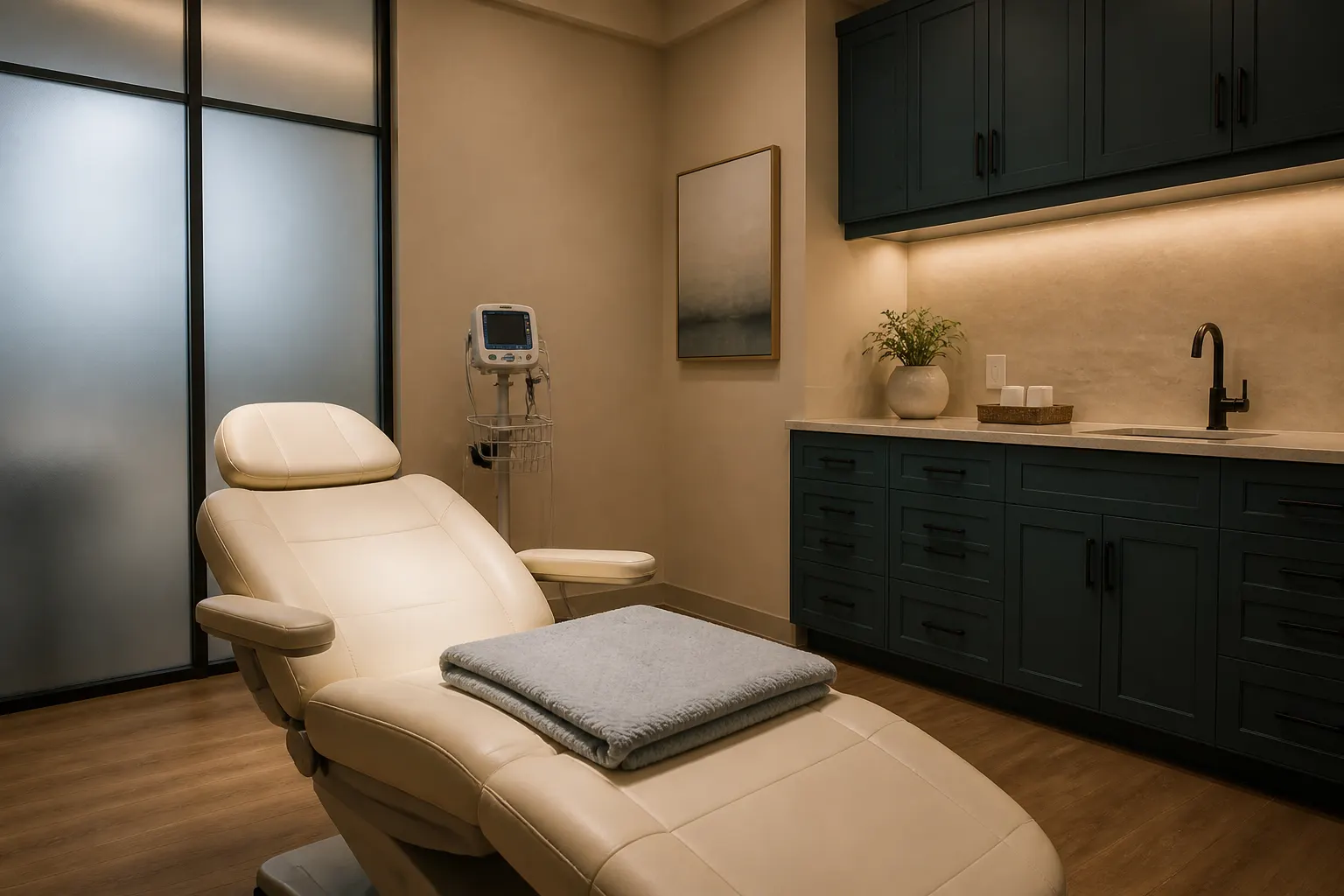
If IV sedation is planned, skip food for 8 hours. Water in a small cup is permitted. After check-in, monitors go on and a small IV is started. Medicine goes through that vein. The surgical site is still numbed.
After the surgery you stay in the chair until sitting, a small sip, and walking with help are all comfortable. The person who brought you hears the home instructions and should remain with you until the day is over. Driving, alcohol, and important signatures wait until the next day.
General anesthesia is a different setting: you are fully unconscious, a breathing tube is used, and the surgery is typically in a hospital. The office will say if that is the plan, including for some jaw surgery and some larger implant cases.
Recovery
The rest of surgery day
After IV sedation, expect to feel slow, thirsty, and unclear about parts of the morning. Nausea can follow IV sedation, general anesthesia, or pain medicine. If you feel sick, take nothing by mouth for an hour, then sip a clear drink slowly. Gauze, ice, and diet follow the procedure you had, not the anesthetic by itself.
The next day
Most of the sedative effect has worn off by the next morning. Do not drive until you are clearly yourself. Numbness from the local anesthetic can last through the day of surgery. Call if it is still there the next morning. Swelling and soreness belong to the surgery and are described on that procedure’s page.
Call us if…
- Breathing is hard, or there is chest pain
- Vomiting continues, or you cannot be roused normally once you are home
- You are still numb the morning after surgery
- You have a rash after a medicine that was prescribed
- Bleeding from the surgical site does not slow with pressure
Those events are uncommon. They are why an escort is required after sedation, not optional.
Cost & insurance
What the anesthetic for oral surgery costs depends on the plan written at your visit. Dr. Chad M. Curtis or Dr. Soroush Samimi will tell you the surgical fee after they have examined you and looked at current imaging.
The things that usually change that fee:
- Whether grafting or a membrane is part of the same surgery
- The anesthesia plan — local anesthesia, IV sedation, or general anesthesia
- The restoration your dentist builds afterward, such as a crown, a bridge, or a full arch
- Whether new imaging is needed before a plan can be written
This office takes most PPO dental plans. Call (561) 278-0004 after the consultation for an estimate of your portion. The tooth or teeth your dentist makes on top of the surgery are usually billed by that dental office.
FAQs
Will IV sedation make me fully unconscious?
Is IV sedation the same as general anesthesia?
Do I have to be sedated?
What are the fasting rules?
Why do I need an escort?
Can I be sedated for the consultation?
Is office sedation without risk?
Who gives the anesthetic?
Related care
- Dental implantsA titanium fixture in the jaw that your dentist later crowns or uses to steady a bridge or denture.
- Wisdom teethExam and removal of third molars that are impacted, partly erupted, or hard to keep clean.
- ExtractionsPlanned removal of a tooth that cannot be saved, from a straightforward lift to a surgical one.
- Office in Delray Beach505 SE 6th Ave. Suite C
Delray Beach, FL 33483