Jaw surgery
Corrective jaw surgery moves the upper jaw, the lower jaw, or the chin when braces alone cannot finish the bite. It is planned with your orthodontist. It is not a weekend procedure, and it is not the same visit as a painful jaw joint.
Overview
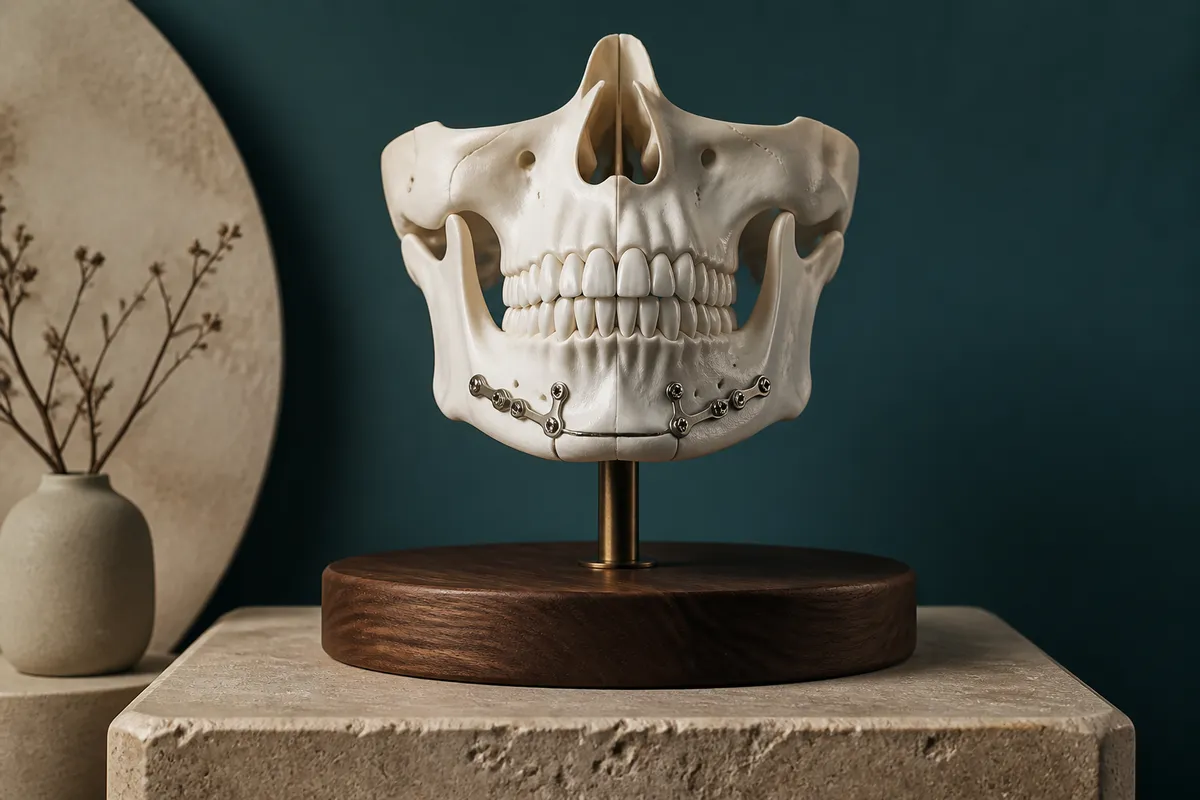
Orthognathic surgery moves the jaw bones themselves. Braces can straighten teeth. They cannot relocate a jaw that grew too far forward, too far back, or unevenly, and they cannot open an airway that is tight because of that jaw position. Small plates and screws hold the bones after they are moved. A long stretch with the jaws wired closed is not the usual plan.
Dr. Curtis and Dr. Samimi are oral and maxillofacial surgeons. That training includes the jaws. Surgery is discussed when it fits the records. It is not pushed when braces, restorative dentistry, or implants would solve the actual problem. Pain in the joint itself is a different visit — see TMJ and jaw joint pain.
Who it's for
Older teens and adults are the people usually evaluated, once growth and the orthodontic plan are clear enough to judge.
- The front teeth still miss each other, or the lower teeth sit ahead of the upper teeth, after braces
- Your orthodontist asked for a surgical read on jaw position
- Chewing is difficult for a reason missing teeth do not explain
- You already have a surgical plan and want it checked
A single missing tooth starts on implants. Wisdom teeth start on that page. A lump or a cyst in the jaw is oral pathology. Clicking, locking, or joint pain starts on the TMJ page.
What to expect
Records come first: how the teeth meet, photos, and the scans that show the bones. If an operation is realistic, your orthodontist stays in the plan. Teeth are often moved into position for months before a hospital date, then detailed again after the jaws have been set.
You are fully asleep for this operation, almost always in a hospital. Going home the same day or the next morning is common. If the work should not be done in the office chair, that is said directly. A smaller jaw procedure can sometimes stay in the office. The consult names the setting.
Recovery
The first days
Facial swelling and bruising are expected. The diet is non-chew or very soft. Elastics may be used. You will not be handed a single national timeline — the orthodontist and the surgeon set food and activity for your fixation.
The first weeks
Many people are back at a desk or in class during the second or third week, with swelling still easy to see. Biting into food stays off the menu until the surgeon and the orthodontist both say the bone can take it. Reduced feeling in the lip, chin, or roof of the mouth can last weeks or months. That is discussed before you schedule.
Later
Orthodontic finishing continues after the bones have moved. Follow-up is shared between this office and your orthodontist. Plates and screws are usually left in place.
Call us if…
- Bleeding does not slow, or you are vomiting and cannot keep liquids down
- Swelling is suddenly worse, or breathing is difficult
- The bite feels sharply different from the position you left the hospital in
- You have a fever, or a rash after an antibiotic
- Pain is escalating instead of easing after the first several days
Cost & insurance
What corrective jaw surgery costs depends on the plan written at your visit. Dr. Chad M. Curtis or Dr. Soroush Samimi will tell you the surgical fee after they have examined you and looked at current imaging.
The things that usually change that fee:
- Whether grafting or a membrane is part of the same surgery
- The anesthesia plan — local anesthesia, IV sedation, or general anesthesia
- The restoration your dentist builds afterward, such as a crown, a bridge, or a full arch
- Whether new imaging is needed before a plan can be written
This office takes most PPO dental plans. Call (561) 278-0004 after the consultation for an estimate of your portion. The tooth or teeth your dentist makes on top of the surgery are usually billed by that dental office.
FAQs
Do you publish how many jaw surgeries you do?
Is this cosmetic surgery?
Will my jaws be wired shut?
Is the surgery done in the office?
How is this different from TMJ treatment?
Should I start with an orthodontist or with you?
How long is the recovery?
Related care
- Dental implantsA titanium fixture in the jaw that your dentist later crowns or uses to steady a bridge or denture.
- TMJ & jaw joint painAn exam of jaw-joint pain, clicking, or limited opening, separate from corrective jaw surgery.
- Oral pathologyExam and biopsy of a sore, patch, lump, or cyst that needs a laboratory diagnosis.
- Office in Delray Beach505 SE 6th Ave. Suite C
Delray Beach, FL 33483