TMJ and jaw joint pain
Jaw-joint pain, clicking, and limited opening are evaluated here as their own problem. That visit is not corrective jaw surgery, and it does not start with an operation.
Overview
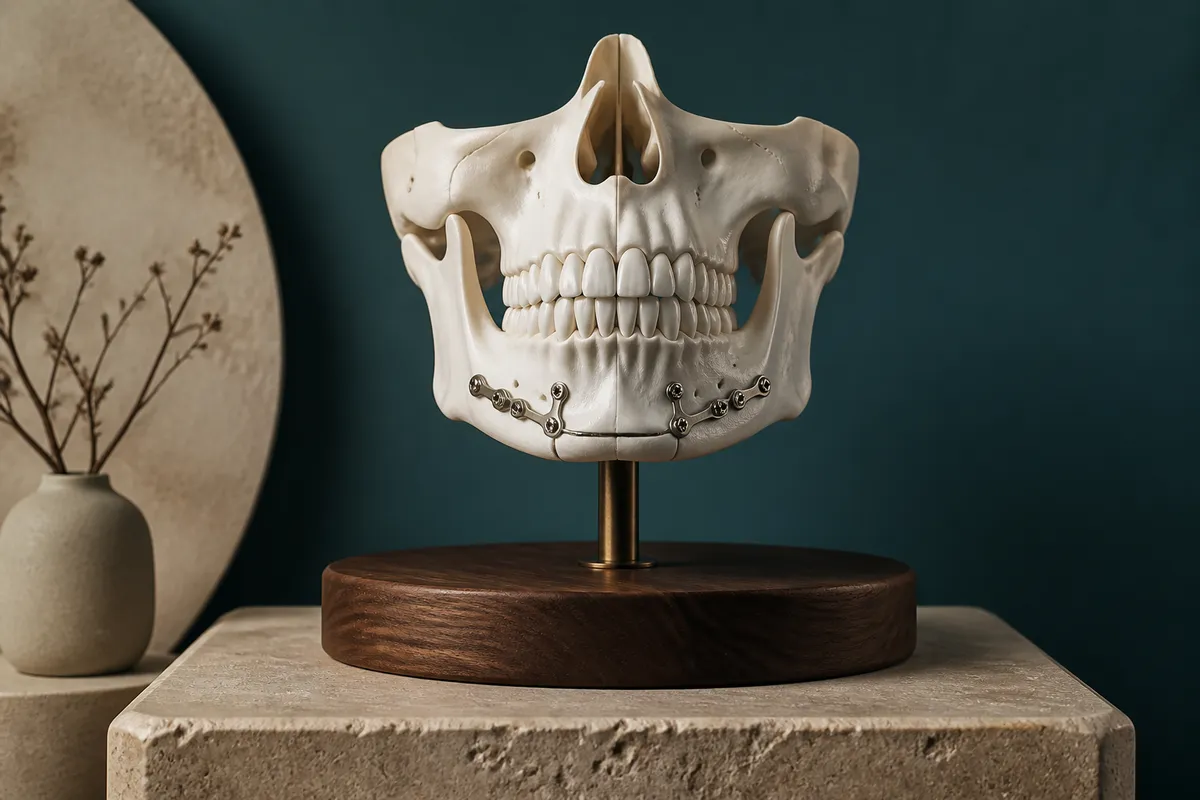
The temporomandibular joints are the hinges in front of the ears. Pain there can come from the joint, from the muscles that move the jaw, from the bite, or from more than one of those at once. Dr. Samimi’s practice includes TMJ disorders. Dr. Curtis evaluates them as part of oral and maxillofacial surgery as well.
The first job is to sort out what hurts. Many people leave with observation, a referral, or a non-surgical plan. A procedure is named only when the exam and the imaging support it. Jaw surgery that repositions the jaws for an underbite or open bite is a different operation and a different page.
Who it's for
Come in if the joint itself is the complaint, not a tooth that needs to come out.
- Pain in front of the ear when you chew or yawn
- Clicking, popping, or a jaw that catches or locks
- Opening that has become limited
- A diagnosis you were given elsewhere and want reviewed before any procedure
A toothache, a wisdom tooth, or a bite that only braces can finish should start on those pages. A sore or a lump in the mouth is oral pathology, not a joint problem.
What to expect
The visit is a history, an exam of how the jaw opens and where it is tender, and a look at imaging if it is needed. Bring any scans you already have. You will not be sedated for a consultation.
Dr. Curtis or Dr. Samimi will say whether the next step is watching, care coordinated with another clinician, or a procedure. If a procedure is recommended, it is described in plain language at that visit, including whether it would be done in the office or in a hospital. This page does not list operations as a menu.
Recovery
If the visit is an exam only
You leave the same day with a plan. There is no surgical recovery. Follow whatever limits you were given for chewing, and keep the follow-up that was scheduled.
If a procedure is scheduled later
Recovery matches that procedure, not a generic joint timeline. You will get written instructions for the surgery you actually have. Office procedures and hospital procedures are not the same recovery. Do not borrow a timetable from a jaw surgery page unless that is the operation that was planned.
Call us if…
- The jaw locks and you cannot close or open it
- Swelling in front of the ear appears suddenly, or you have a fever
- Pain is abruptly worse than the pattern you were seen for
- After a procedure, bleeding does not slow or swelling increases past the window you were given
- You have trouble breathing or swallowing
Cost & insurance
What evaluation of jaw-joint pain costs depends on the plan written at your visit. Dr. Chad M. Curtis or Dr. Soroush Samimi will tell you the surgical fee after they have examined you and looked at current imaging.
The things that usually change that fee:
- Whether grafting or a membrane is part of the same surgery
- The anesthesia plan — local anesthesia, IV sedation, or general anesthesia
- The restoration your dentist builds afterward, such as a crown, a bridge, or a full arch
- Whether new imaging is needed before a plan can be written
This office takes most PPO dental plans. Call (561) 278-0004 after the consultation for an estimate of your portion. The tooth or teeth your dentist makes on top of the surgery are usually billed by that dental office.
FAQs
Will I have surgery at the first visit?
Is clicking always a problem?
Is this the same as jaw surgery for an underbite?
Do you make a night guard here?
What if another office already recommended an operation?
Can I be sedated for the exam?
Who should I see, Dr. Curtis or Dr. Samimi?
Related care
- Jaw surgeryRepositions the jaws when the bite or airway cannot be finished with braces alone.
- Facial trauma & dental injuriesEvaluation of injured teeth and jaws, in the office or directed to a hospital when that is the right setting.
- Oral pathologyExam and biopsy of a sore, patch, lump, or cyst that needs a laboratory diagnosis.
- Office in Delray Beach505 SE 6th Ave. Suite C
Delray Beach, FL 33483