Wisdom teeth
Third molars are checked when the jaw runs out of room, when a tooth is stuck under the gum, or when the gum behind the last molar keeps getting sore. Removal is a decision after an exam and a film — not a default for every patient.
Overview
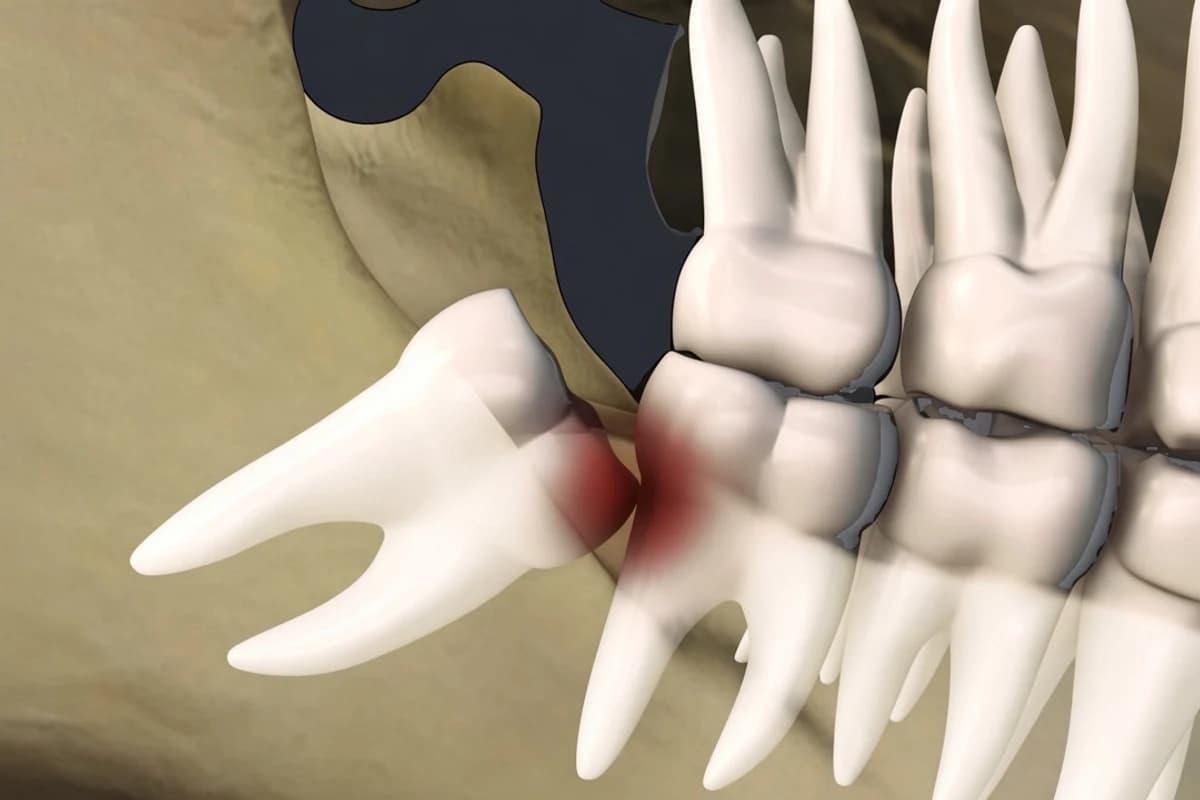
A wisdom tooth that lacks space may stay under bone, poke through only partway, or lean into the molar in front of it. Any of those positions can lead to pain, infection, decay that is hard to reach, or damage to the neighboring tooth. You do not have to wait for a flare-up to have them looked at.
An exam in the mid-teens — often around age 16 — is a common time to see how the roots and the jaw are developing. Earlier removal is often simpler because the roots are shorter and the bone is less dense. Dr. Curtis or Dr. Samimi will say whether a tooth should come out now, later, or not at all.
Why a younger patient often heals more readily
- The roots are often still short
- The bone around the tooth is usually less dense
- Healing tends to be quicker than it is decades later
Who it's for
The usual reasons for the visit:
- The tooth is trapped under gum or bone
- The gum over a partly erupted tooth keeps swelling or draining
- The tooth is decayed, or it makes the molar in front of it hard to clean
- Food packs behind the last molar
- The tooth is in the way of orthodontic movement
- You would rather deal with a tooth that is likely to flare than wait for the week it does
A fully erupted wisdom tooth that you can keep clean may stay. That call is made from the exam and the images. Other extractions — broken molars, leftover roots — are a separate page.
What to expect
The first visit is a consultation. The surgeon reviews your health history, examines you, and looks at imaging. Bring recent films, or have your dentist send them. The plan names which teeth come out and which anesthesia fits the visit.
On surgery day the teeth are numbed. IV sedation is available if you want to sleep through it. Local anesthesia alone is enough for some erupted teeth in a calm adult. After the anesthetic is working, the teeth are removed. Four impacted teeth often take under an hour. The clock depends on how deep they sit.
Planning around school or work? See recovering from wisdom teeth and what to expect from removal.
Recovery
Day-by-day care is written out on the wisdom teeth aftercare page. A sketch of the first two weeks:
Day of surgery
You will be numb for much of the day. Bite on gauze for about 30 minutes and replace it until oozing slows. Ice the cheeks 15 minutes at a time, and only on this first day. Do not rinse hard, do not use a straw, and stay with soft food. Skip heavy lifting for two days. If you had IV sedation or general anesthesia, an escort stays with you and you do not drive.
Days 2 through 4
Soreness is commonly worst in the first 24 to 48 hours. Swelling often shows up the next day and is largest around day 3. Start the prescribed rinse the day after surgery and use it for five days. Light exercise can resume after day 3 if you feel up to it. Bruising may appear in the first two or three days.
Days 4 through 14
A dry socket, if it happens, usually shows up between days 4 and 7 as a deep ache — call the office. Sutures are often gone or removed around one week. Swelling commonly settles within that first week. Bruising can take up to about 14 days to fade. Small bony edges can feel sharp as the gum shrinks; many smooth over on their own. Corners of the mouth can crack — plain lip balm helps.
Call us if…
- Bleeding does not slow after firm gauze or a moist tea bag for 30 minutes
- You are still numb the morning after surgery
- Pain deepens between days 4 and 7 instead of easing
- Swelling is worse after day 3, or you cannot swallow liquids
- You get a rash after starting an antibiotic
- You cannot keep fluids down after the first hour at home
Read the aftercare instructions
Cost & insurance
What wisdom tooth removal costs depends on the plan written at your visit. Dr. Chad M. Curtis or Dr. Soroush Samimi will tell you the surgical fee after they have examined you and looked at current imaging.
The things that usually change that fee:
- Whether grafting or a membrane is part of the same surgery
- The anesthesia plan — local anesthesia, IV sedation, or general anesthesia
- The restoration your dentist builds afterward, such as a crown, a bridge, or a full arch
- Whether new imaging is needed before a plan can be written
This office takes most PPO dental plans. Call (561) 278-0004 after the consultation for an estimate of your portion. The tooth or teeth your dentist makes on top of the surgery are usually billed by that dental office.
FAQs
Do all four wisdom teeth have to come out?
When should a teenager be seen?
Can I be sedated?
How long is the surgery?
When can I go back to school or work?
What is a dry socket?
Do I need a referral?
Related care
- ExtractionsPlanned removal of a tooth that cannot be saved, from a straightforward lift to a surgical one.
- Oral pathologyExam and biopsy of a sore, patch, lump, or cyst that needs a laboratory diagnosis.
- Anesthesia & sedation optionsLocal anesthesia, IV sedation, or general anesthesia, chosen for the procedure and your health.
- Office in Delray Beach505 SE 6th Ave. Suite C
Delray Beach, FL 33483